
Get involved from day one
Participation doesn’t just begin once a permit is granted. Even during the reception period, residents need a daily routine, language practice, social interaction, activities, and a sense of purpose. Idleness and uncertainty can lead to stress, frustration, and a loss of self-confidence.
TM Opvang & Projectmanagement considers getting involved from day one to be part of providing quality care.
Why It's Important to Participate
Shelter is often temporary, but the time spent at a shelter has a significant impact on residents. A clear daily routine and meaningful activities help residents find peace, build connections, and gradually become more self-reliant.
Participation also contributes to the quality of life in the community and to a sense of connection with the surrounding area.
What do we mean by "getting involved from day one"?
Involving residents from day one means that they are not only provided with support, but are also engaged in daily life at and around the site—in a way that is appropriate to their situation, background, capacity, and legal status.
It can start small. With a residents' meeting, a language class, a sports activity, a cleaning schedule, a volunteer activity, a cooking session, a get-together with neighborhood partners, or participation in local initiatives.
Themes to get involved in from day one
1. Daily Schedule
A clear daily routine provides a sense of calm. Residents know what to expect and have times when they can participate in activities, conversations, appointments, or practical tasks.
TM helps establish a recognizable structure on-site.
2. Language and Communication
Language is an important first step toward self-reliance. Even simple language activities, practice sessions, or collaboration with volunteers can help residents become more self-sufficient.
TM encourages accessible language activities and clear communication whenever possible.
3. Meeting
Interaction helps bridge the gap—not only among residents themselves, but also between residents and the local community. This requires careful guidance and close coordination with the municipality and partners.
4. Volunteer Work and Activities
Whenever possible, residents can participate in volunteer work, sports, practical activities, or local initiatives. This gives meaning to their day and can help foster a positive self-image.
5. Resident Participation
Residents often have a good understanding of what’s going on in their community. Resident meetings, resident committees, or discussions help identify issues and implement improvements.
6. Self-reliance
Participation is also about personal responsibility. Residents are encouraged to become more self-reliant, step by step, within the limits of their abilities.
7. Connection to the Surrounding Area
Refugees become a temporary part of the local community. That is why we focus on clear communication, close cooperation with municipalities and partners, and building connections with local residents and the surrounding community. This fosters greater understanding, support, and a sense of calm around the reception center.
Real-world examples
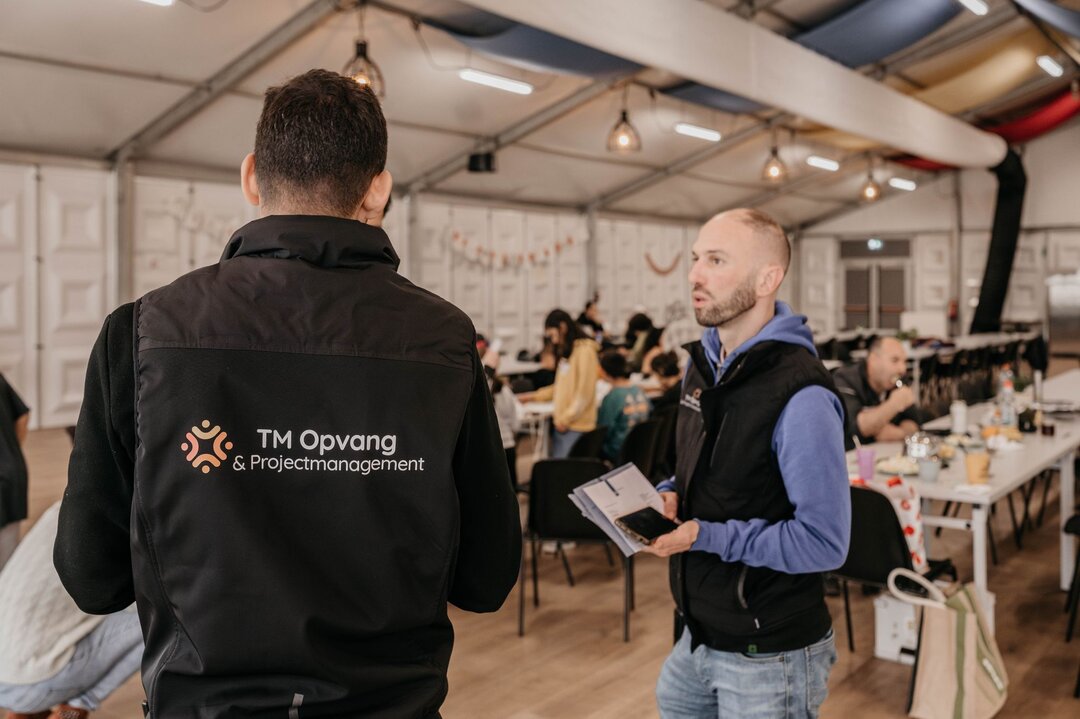
Residents' Meeting
Resident meetings provide an opportunity to gather feedback on quality of life, meals, cleaning, activities, communication, and interpersonal relationships.
Language Activities
Volunteers or local partners can help by offering accessible language sessions, practice conversations, or practical language support.
Sports and Socializing
Sports activities provide exercise, relaxation, and social interaction.
Volunteer Work
Residents can contribute to local initiatives, neighborhood activities, or practical tasks whenever possible.
On-site Activities
Activities at the location itself can also contribute to structure, calm, and connection.
The Role of TM
TM helps organize participation in a practical way. We assess what works best for the location, target audience, surroundings, and available partners.
Our services may include:
- Resident Meetings
- Residents' Meetings
- Activity Planning
- Collaboration with Local Organizations
- Connecting with Volunteers
- Identifying Needs
- Promoting Self-Reliance
- Coordination with the municipality and supply chain partners
- Support for Language, Interaction, and Participation
Participating as Part of Quality of Life
When residents feel they have a sense of purpose and are able to participate in an appropriate way, there is often a greater sense of calm on-site. A structured daily routine, a sense of involvement, and clear communication help reduce tensions and improve quality of life.
Building a Future Together
Getting involved from day one requires collaboration between the municipality, the venue organization, residents, volunteers, local partners, and the surrounding community. TM helps to shape this collaboration in a practical and thoughtful way.