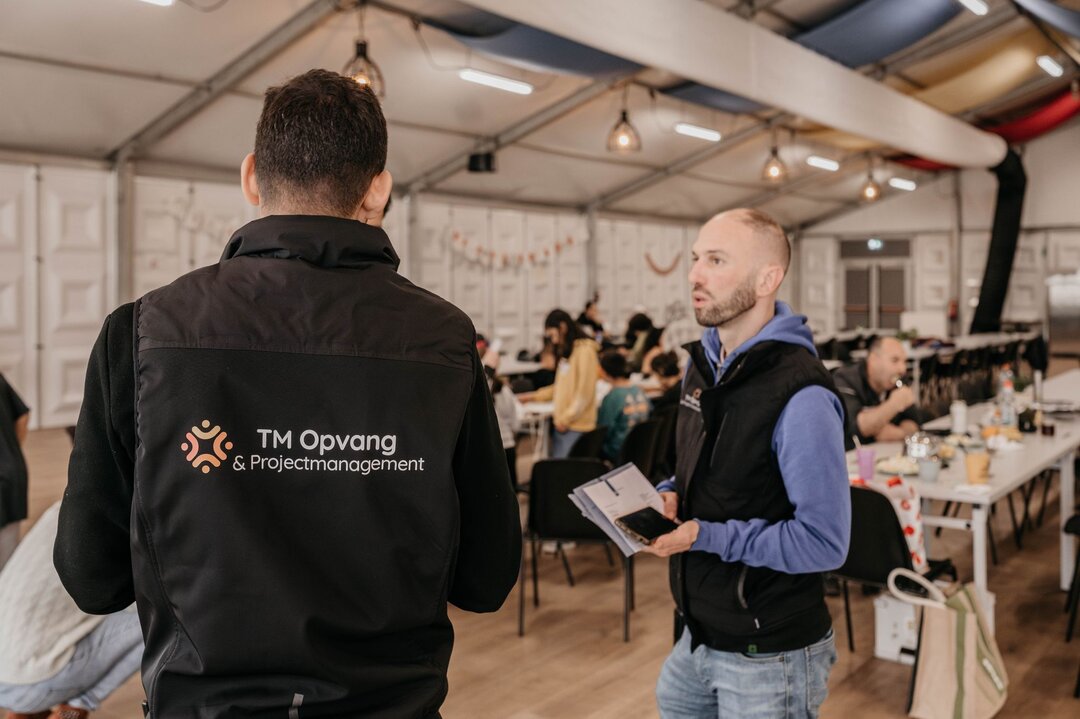

Municipal shelter services require more than just providing a building. They involve safety, quality of life, resident support, collaboration with partners in the care chain, administrative decision-making, communication with the local community, and day-to-day management.
TM Shelter & Project Management assists municipalities in preparing, organizing, and operating shelter facilities.
From Initial Assessment to Day-to-Day Implementation
A shelter is often set up under time pressure. At the same time, providing shelter requires careful decision-making. Where can the shelter be located? Which target group will be accommodated? What facilities are needed? How will safety be ensured? How will local residents be informed? And who will oversee day-to-day operations?
TM helps municipalities answer these questions in a practical and administratively sound manner.
What is municipal shelter?
Municipal shelter refers to shelter that is organized or facilitated at the local level, often in collaboration with partners such as the COA, the safety region, healthcare providers, security services, civil society organizations, and local initiatives.
The form may vary by municipality and situation. Examples include temporary municipal shelter, emergency shelter, the expansion of existing facilities, or shelter provided as part of broader regional agreements.
Key Components of Municipal Child Care
1. Location and Feasibility
A suitable location must be practical, safe, and justifiable from an administrative standpoint. Factors such as capacity, facilities, the surrounding area, accessibility, costs, and scheduling all play a role.
TM provides support for site surveys, feasibility studies, and risk and environmental assessments.
2. Administrative Decision-Making
Childcare affects the administration, the council, residents, and community partners. Clear documents, well-defined scenarios, and realistic options help ensure that the decision-making process is conducted carefully.
TM provides support for board proposals, administrative documents, project plans, and business cases.
3. Communication with residents and nearby residents
Support doesn't just happen on its own. Clear communication, accessibility, community meetings, and taking residents' concerns seriously are important for peace of mind and trust.
TM can assist with resident meetings, resident panels, resident surveys, and practical communication.
4. Location Management
A shelter requires daily oversight. Site management ensures leadership, consultation structures, reporting, coordination with partners, safety, and quality of life.
TM provides site managers who maintain a clear overview and can adapt quickly.
5. Housing Support
Residents need guidance in settling into the facility, understanding agreements, establishing a daily routine, and taking their first steps toward self-reliance and participation.
TM provides housing support workers who are visible, approachable, and deeply committed to their work.
6. Safety and Quality of Life
Safety isn't just about supervision. It's also about clear house rules, structure, early detection, prevention, communication, and collaboration with security, healthcare providers, and the municipality.
TM helps organize safety and quality of life in a practical way.
7. Collaboration with supply chain partners
Providing shelter requires collaboration with entities such as the municipality, the COA, healthcare providers, security services, the Dutch Council for Refugees, the Municipal Health Service (GGD), educational institutions, catering companies, facility management providers, and local organizations.
TM brings structure to this collaboration and ensures direct communication channels.
Step-by-Step Guide to Municipal Shelter Services
Step 1 — Explore
The municipal needs, administrative context, potential locations, target audience, and preconditions are identified.
Step 2 — Laying the Foundation
Locations, risks, costs, the surrounding area, scheduling, and feasibility are examined and worked out in detail.
Step 3 — Decisions
The municipality prepares decisions and communicates clearly with the council, residents, and partners.
Step 4 — Set Up
Work processes, staffing, house rules, safety, facilities management, and agreements with partners are being established.
Step 5 — Open
Residents are welcomed, guided, and shown around. Day-to-day operations are getting underway.
Step 6 — Manage and Improve
The site is managed on a daily basis; issues are addressed, and processes are improved as needed.
How TM Provides Support
TM can provide support in various ways:
- Strategic Consulting
- Project Leadership and Project Management
- Site Surveys
- Feasibility Studies
- Resident Participation
- Resident Information Sessions
- Business Cases for the COA
- Site Management
- Housing Support
- Crisis Support
- Staffing and Recruitment of Professionals
Why TM?
TM combines administrative insight with operational experience. We understand the pressures facing municipalities, but we also know what is needed on the ground to restore calm, ensure safety, and provide structure.
Our strength lies in short lines of communication, practical implementation, and people-centered guidance.